

Sourcing Micro Planetary Roller Screws for Electromechanical Actuators (EMA)
A comprehensive guide for engineers and procurement teams on specifying, sizing, and sourcing micro roller screws for high-load, continuous-duty EMAs.
The transition from fluid power to fully electric motion control has accelerated rapidly. In 2026, the demand for Electromechanical Actuators (EMAs) is driven by the need for cleaner, more controllable, and highly integrated systems across robotics, aerospace, and medical device manufacturing. However, when engineers attempt to replace hydraulic cylinders within the exact same space envelope, standard ball screws often fail under the concentrated force requirements.
For high-force density in constrained packages—specifically below 20mm screw diameters—micro planetary roller screws have emerged as the definitive transmission element.
This guide is designed for engineering and procurement teams. It details the operational boundaries of micro roller screws, the specific sizing constraints often omitted from standard catalogs, and the critical criteria for auditing suppliers when sourcing these precision components.
Scope note (updated June 29, 2026): This article focuses on sub-20mm planetary roller screw selection for global EMA sourcing programs. It is not a substitute for supplier load-life calculations, thermal testing, or safety certification; use it to prepare RFQ inputs, screen suppliers, and decide where engineering validation is still required.
The Engineering Reality: Why EMAs Require Roller Screws
The primary challenge in designing an EMA to replace a hydraulic cylinder is the power density deficit. Fluid power systems can generate massive linear thrust from a very small piston area. An electric motor paired with a standard ball screw typically requires a significantly larger diameter to match that thrust, primarily because ball screws rely on the point-contact of spherical bearings.
Planetary roller screws solve this by replacing the recirculating balls with threaded cylindrical rollers. This fundamental geometry shift provides line contact rather than point contact. The result is a drastic increase in the load-bearing surface area within the same nut diameter.
- Load Capacity Multiplier: A micro roller screw can typically support 3 to 5 times the dynamic load of a identically sized ball screw.
- Extended Service Life: Due to the distributed stress across the threaded rollers, the theoretical fatigue life can be up to 10 times longer under equivalent load conditions.
- Shock Load Tolerance: In applications like humanoid robotics or heavy AGV (Automated Guided Vehicle) suspensions, impact loads can shatter the point-contact elements of a ball screw. The line-contact of a roller screw absorbs and distributes shock impulses safely.
Actuation Architecture: Hydraulic vs. EMA with Planetary Roller Screw
Engineering Boundaries: Sizing and Specifying Constraints
While micro roller screws offer massive load capacities, specifying them requires a rigorous understanding of the operating boundaries. It is a common engineering error to size a roller screw based exclusively on the static load rating provided in a catalog, ignoring thermal and dynamic constraints.
1. Continuous Duty and Thermal Limits
High force density translates directly into heat generation. Because a planetary roller screw has many more contact points than a ball screw, it inherently generates more internal friction during high-speed, continuous-duty cycles. When housed inside a sealed EMA (such as an IP67-rated robotic actuator), this heat has limited pathways to escape. If the continuous duty cycle exceeds the thermal dissipation rate, the internal temperature will spike. This can degrade the lubricant, leading to accelerated wear and catastrophic mechanical failure. Engineering Boundary: If the application requires 100% duty cycle at high speeds, you must calculate the precise heat generation (wattage) and ensure the actuator housing acts as an adequate heat sink, or consider active cooling.
2. Pitch and Lead Selection for Back-drivability
The lead of the screw determines how much linear travel occurs per rotation of the motor. In robotics and medical lifting applications, back-drivability is often a critical safety feature—allowing a joint to yield under external force. Engineering Boundary: Planetary roller screws are typically less back-drivable than ball screws due to higher internal friction. If back-drivability is required for safety compliance, engineers must select a higher lead (e.g., 5mm or greater on a 10mm diameter screw), minimize seal friction, and carefully tune the motor's holding torque.
3. Lubrication in Miniature Envelopes
Lubrication is the lifeblood of a roller screw. In micro screws (diameters of 4mm to 12mm), the physical space for grease retention is minimal. Furthermore, at high speeds, centrifugal forces can push grease away from the threaded contact zones. Engineering Boundary: Standard lithium-based greases are often insufficient for micro EMAs. Procurement must work with engineering to specify specialized greases (e.g., synthetic PAO or PFPE based) that maintain viscosity at elevated temperatures and resist churning in confined spaces.
Structural Comparison: Micro Roller Screws vs. Alternatives in EMAs
When specifying linear transmission elements for an EMA, engineering teams typically weigh four main options. The following table breaks down the performance characteristics specifically for high-load, compact applications.
| Transmission Type | Force Density (Load/Size) | Shock Tolerance | Speed Capability | Typical Service Life | Cost Profile | Best Application Fit |
|---|---|---|---|---|---|---|
| Micro Planetary Roller Screw | Very High | Excellent | High | Up to 10x | Premium | Humanoid joints, aerospace EMAs, surgical robots |
| Miniature Ball Screw | Moderate | Poor | Very High | Standard | Moderate | CNC axes, general pick-and-place, low-force EMA |
| Lead Screw (Acme/Trapezoidal) | Low to Moderate | Good | Low | Short (wear-dependent) | Low | Intermittent duty, low-speed adjustments, lab prep |
| Hydraulic Cylinder (Legacy) | Highest | Excellent | Moderate | Maintenance heavy | High (System) | Heavy construction equipment, industrial presses |
| Pneumatic Cylinder | Very Low | Excellent | Very High | Standard | Low (System) | Packaging lines, basic factory automation |
| Inverted Roller Screw (RVi) | Very High | Excellent | High | Up to 10x | Premium+ | Ultra-compact hollow-shaft EMAs |
Procurement Strategy: Supplier Evaluation Checklist
Sourcing micro planetary roller screws is highly specialized. Unlike standard ball screws, which have thousands of commoditized suppliers globally, the precision internal thread grinding required for a planetary roller nut restricts the legitimate supply base to a handful of advanced manufacturers.
Procurement teams must evaluate suppliers not just on price and lead time, but on their deep manufacturing capabilities. Use this checklist when qualifying a new vendor for micro roller screws:
- 1. Thread Grinding Capability Verification: Does the supplier utilize state-of-the-art internal and external thread grinding machines? Specifically, ask about their capability to grind internal threads for nuts under 15mm in diameter.
- 2. Tolerance and Accuracy Class: Can the supplier consistently deliver ISO/DIN accuracy classes of C3 or C5? Ask for sample inspection reports detailing lead error over 300mm.
- 3. Metallurgy and Heat Treatment: Do they control the heat treatment process in-house? Micro rollers require precise case hardening (typically high-carbon bearing steel or martensitic stainless steel for medical) to ensure surface hardness without creating a brittle core.
- 4. Custom End-Machining: Most micro EMA designs require highly customized shaft ends to integrate directly into servo motor rotors or support bearings. Can the supplier provide custom turning and grinding on the screw shaft to single-micron tolerances?
- 5. Assembly and Preload Matching: Roller screws require meticulous assembly and selective matching of rollers to achieve the correct preload without excessive friction. Does the supplier provide documented friction torque testing for each assembled unit?
- 6. Prototyping Lead Time vs. Production Scale: A common bottleneck is transitioning from a 4-piece prototype run (often taking 10-14 weeks) to a 1,000-piece production run. Verify the supplier's volume capacity and expected lead times for scaled orders.
Risks and Limitations: When NOT to Use Micro Roller Screws
Despite their superior performance, micro roller screws are not the universal solution for every linear motion problem. Specifying them incorrectly can lead to severe cost overruns and over-engineered systems.
- Low-Force, High-Speed Automation: If the application only requires moving a lightweight sensor array at high speeds, a miniature ball screw or a linear motor is far more cost-effective. Roller screws introduce unnecessary mass and friction in low-load scenarios.
- Cost-Sensitive Consumer Goods: The complex manufacturing process of threaded rollers and internally threaded nuts keeps the price of roller screws strictly in the premium B2B tier. They cannot compete with mass-produced ball screws on unit cost.
- Extreme Contamination Environments: While robust, the intricate threading mechanism can be jammed by fine particulate ingress. If the EMA cannot be properly sealed (IP65 minimum), an exposed roller screw will fail prematurely compared to a robust, self-clearing hydraulic cylinder.
Frequently Asked Questions (FAQ)
What is the typical lead time for a custom micro planetary roller screw?
In the current market (2026), initial custom prototypes typically require 10 to 16 weeks, driven heavily by custom thread grinding and heat treatment schedules. Standard catalog sizes may be available in 4 to 8 weeks, but true EMA integration almost always requires custom end-machining.
Can a micro roller screw operate without lubrication?
No. Unlike some polymer nut lead screws, planetary roller screws involve metal-to-metal rolling and sliding contact. Running a roller screw completely dry will result in rapid galling, extreme heat, and immediate failure. In vacuum or cleanroom environments, specialized dry-film lubricants or low-outgassing PFPE greases must be used.
How do I calculate the expected life of a roller screw in my EMA?
Life expectancy is calculated using the Dynamic Load Rating (C) and the equivalent dynamic load (P) applied by the application, following the L10 life equation: L10 = (C / P)^3 * 10^6 revolutions. However, engineers must adjust this baseline figure based on shock factors, lubrication state, and operating temperature.
Are inverted roller screws (RVi) better for compact EMAs?
Inverted roller screws, where the rollers travel inside an elongated hollow nut and the motor is built directly around the nut, provide the ultimate space savings in axial length. They are the preferred architecture for humanoid robot legs and arms. However, they carry a higher cost and introduce more complex bearing and seal requirements.
Next Steps for Your EMA Project
Successfully transitioning to high-force Electromechanical Actuators requires a transmission component that won't fail under pressure. Micro planetary roller screws offer the highest force density and shock tolerance available in sub-20mm packages.
However, sourcing the right screw requires bridging the gap between theoretical engineering sizing and practical manufacturing constraints.
If your team is designing a new EMA for robotics, medical devices, or aerospace, we recommend engaging with application engineers during the initial CAD phase, not after the motor and housing are already locked in.
Ready to evaluate micro roller screws for your next actuator? Explore ultra-micro and miniature roller screw options or Contact our engineering team for a sizing and feasibility review.
References & Sources
- Tolomatic. Actuator Life: How to Estimate for Ball and Roller Screw Actuators. Retrieved from tolomatic.com
- Tolomatic. How Roller Screw and Ball Screw Actuators Compare in High Force Applications. Retrieved from tolomatic.com
- SKF. Roller Screws Technical Information. Retrieved from skf.com
- Ewellix. Power Density Solution for Electromechanical Actuators. Retrieved from ewellix.com
Author

More Posts
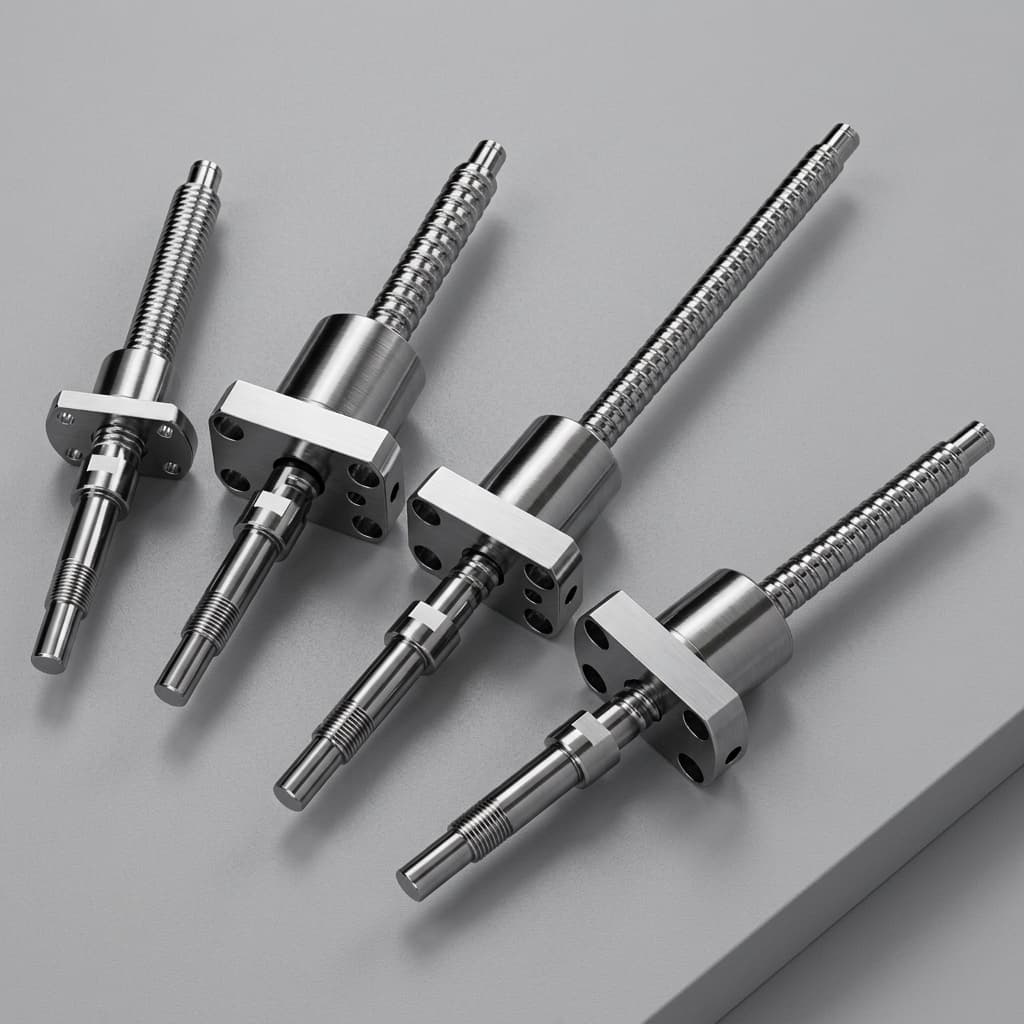
How to Select the Right Inverted Roller Screw for Compact Aerospace Mechanisms
An engineering deep-dive into Inverted Roller Screws (RVi) for flight-control actuators, satellite deployment, and low-backlash aerospace mechanisms.
Material Cleanliness and Compliance in Micro Roller Screws: A 2026 Procurement Guide
Procurement guide for micro roller screw material cleanliness, ASTM E45 limits, VIM-VAR steel selection, traceability, and 2026 EU compliance watchpoints.
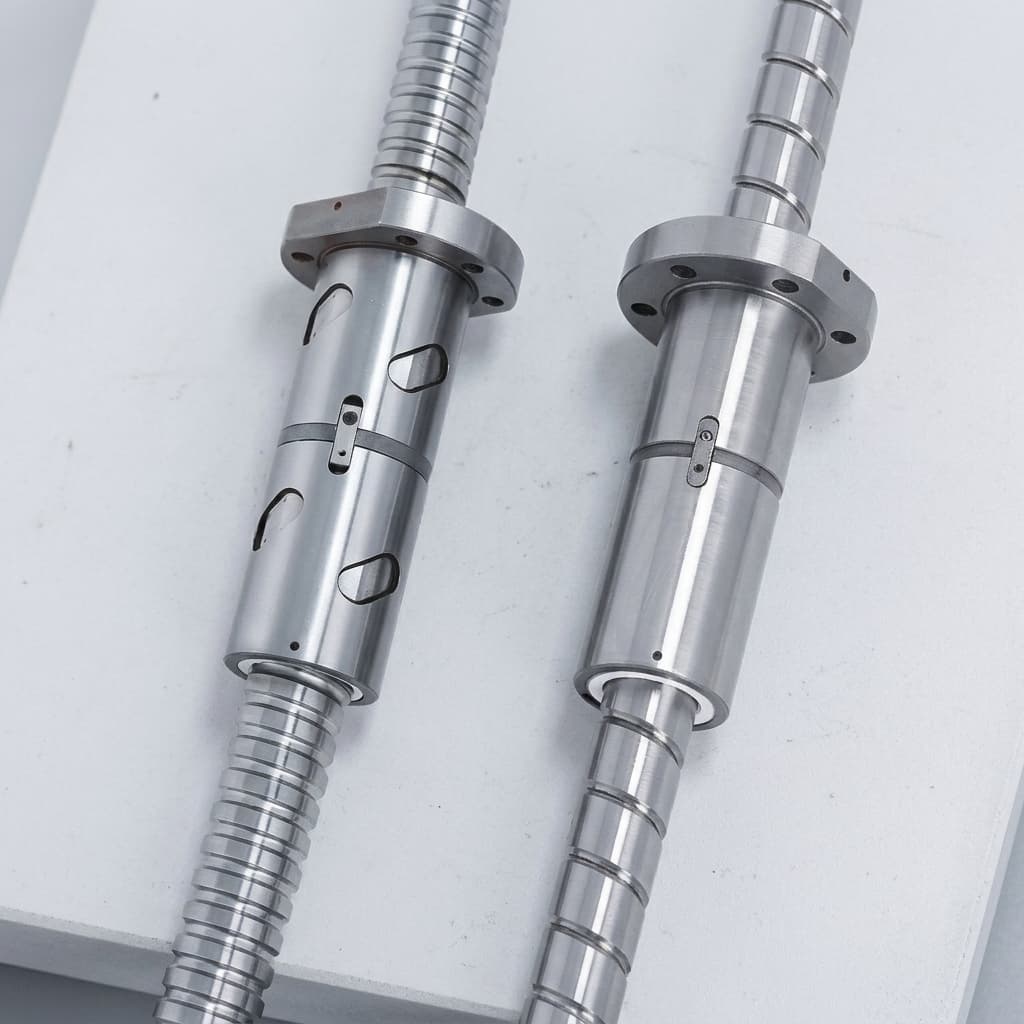
The Hidden Costs of Micro Roller Screw Integration: Specifying Custom End Machining
Specify custom end machining for micro planetary roller screws: RFQ tolerances, runout risks, heat-treatment limits, and when to request factory support.